End-of-Life Care Crisis
The Cost
The Cost
of Caring
As Baby Boomers age and immigration policy tightens, who will be there to care for America's dying?

As Baby Boomers age and immigration policy tightens, who will be there to care for America's dying?
When our loved ones suffer, will we do anything within our power to heal them, help them, and comfort them? Or will we decide that their health, their life, their light, is no longer valued? That is the difference hospice and home health care can make — but the United States is on the verge of a critical shortage of the workers who provide it.
Immigrants make up 17% of the U.S. labor force, but account for almost 40% of the nation's home health aides. Immigration policy will determine whether everyone in need can receive care.
Death is something everyone considers, but few people think about what the last days, months, or years will look like until they face them — or become a caregiver for an aging parent. The decisions made in Washington about who is allowed to work in this country will determine whether millions of Americans have anyone there to help at all.
I have experienced end-of-life caregiving twice in my life. My stepfather battled bone cancer for seven years. He had hospice care for his final two years while my mother and I took him to the hospital for regular appointments and infusions. A few years later, my wife developed an aggressive form of leukemia. She spent a year and a half in and out of the hospital and in-patient rehab centers. I was her caregiver at home, and we had an occasional home health aide before she passed away.
Millions of families will go through the strain and trauma of caring for someone at the end of their life. The United States is heading toward a crisis because of the aging of the Baby Boomer population. According to 2020 data, approximately one in every six Americans was over the age of 65 — an increase of approximately 30 percent in the last 15 years — while the average life expectancy was nearly 79 years (Roca 2025). That means a significantly growing number of people are in the final years of their life, implying increased strain on the health care system at large.
The rapidly aging Baby Boomer generation means Millennials need to decide what kind of life they want for their parents in their last years — and what level of care will allow them to provide that.
Home health care provides acute treatments and services for people who either cannot or do not need to visit a hospital or clinic — wound care, injections, bathing and grooming, or physical therapy ("Home Health Services" n.d.). Hospice care is frequently an all-day level of care designed to reduce discomfort and maintain quality of life at the end of the lives of the elderly or those with severe illnesses ("Hospice" 2021). Nearly half of all Americans die while receiving hospice care, either in their home or in a residential care facility (Daniels 2019). The final months of a person's life, spent in hospice, are marked by physical pain, emotional distress, and the desire to do the best for those with limited time.
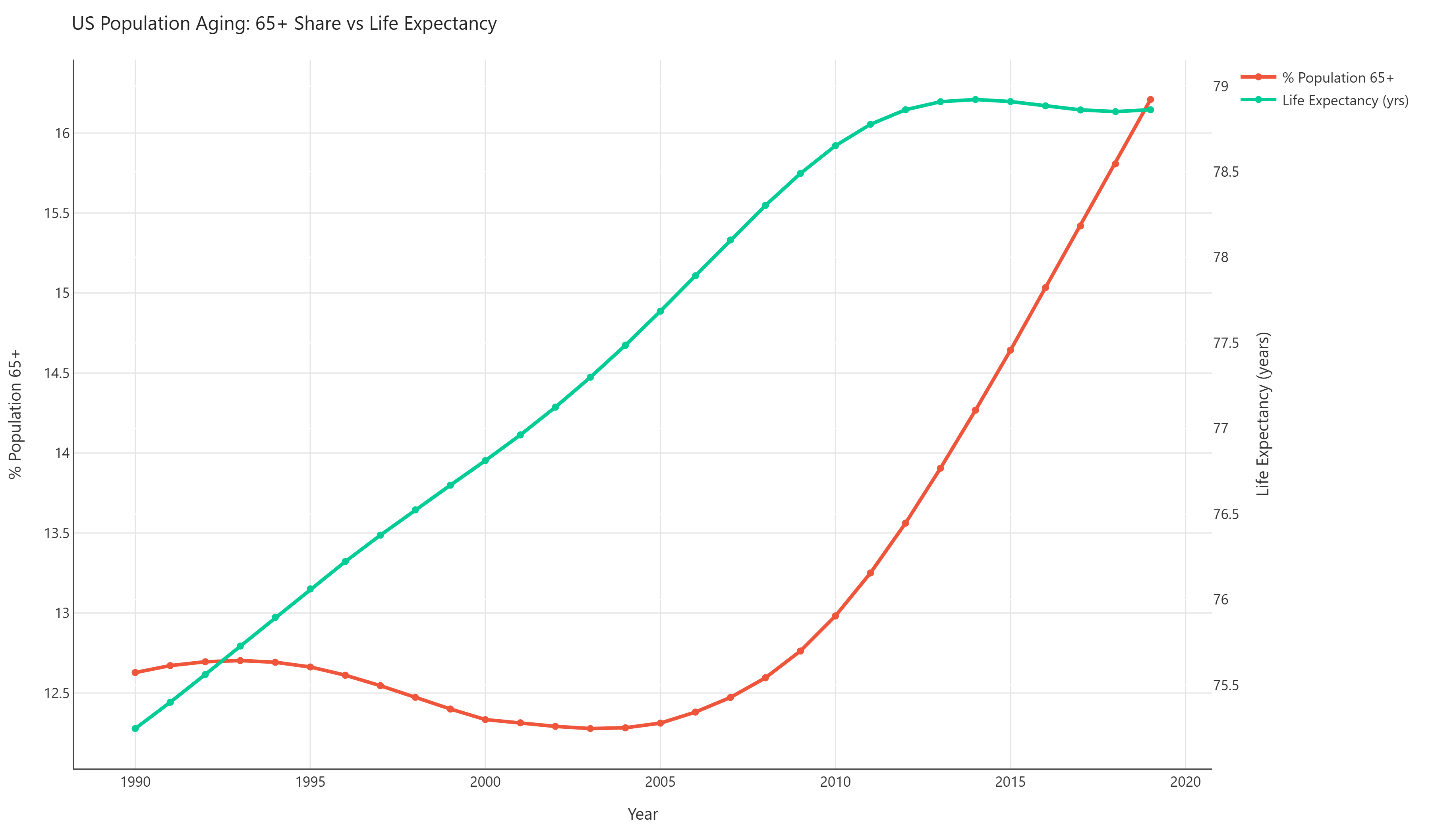
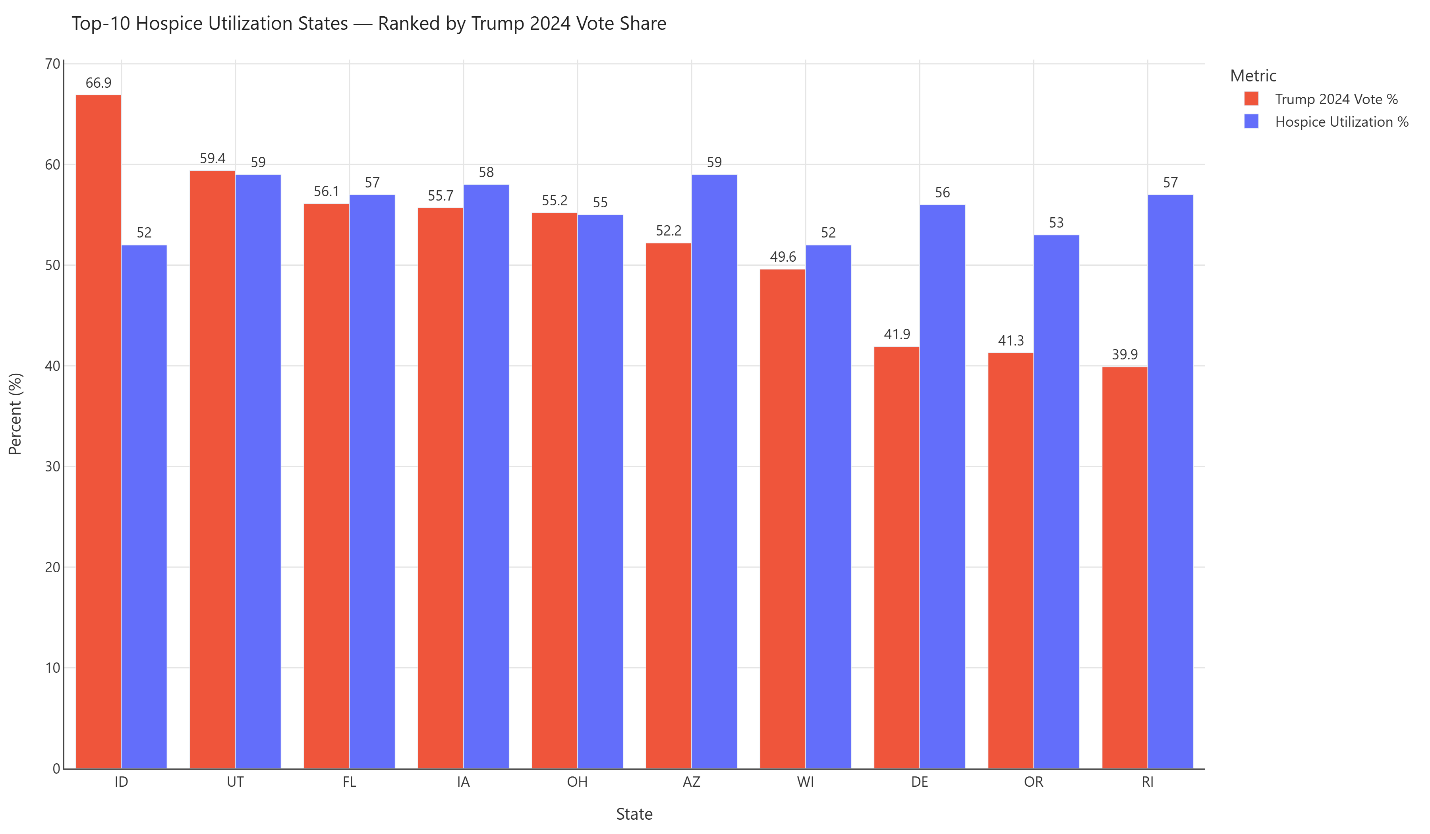
Some people will never get to consider end-of-life planning for their loved ones because they die suddenly — due to a heart attack, car crash, or any number of reasons. The rest will go through that process, regardless of their race, gender, finances, or place of residence. The top states for hospice utilization include those with large and small populations, along the coasts and in the heartland, with a mix of political preferences — as seen by the share of voters who chose Donald Trump in the 2024 presidential election (Daniels 2019).
Elections may determine whether the U.S. sees a shortfall of home health care and hospice workers in the coming years, however. Experts see immigration policy as an inflection point that will determine whether everyone in need of assistance can receive it and afford the quality of life they deserve in their final years.
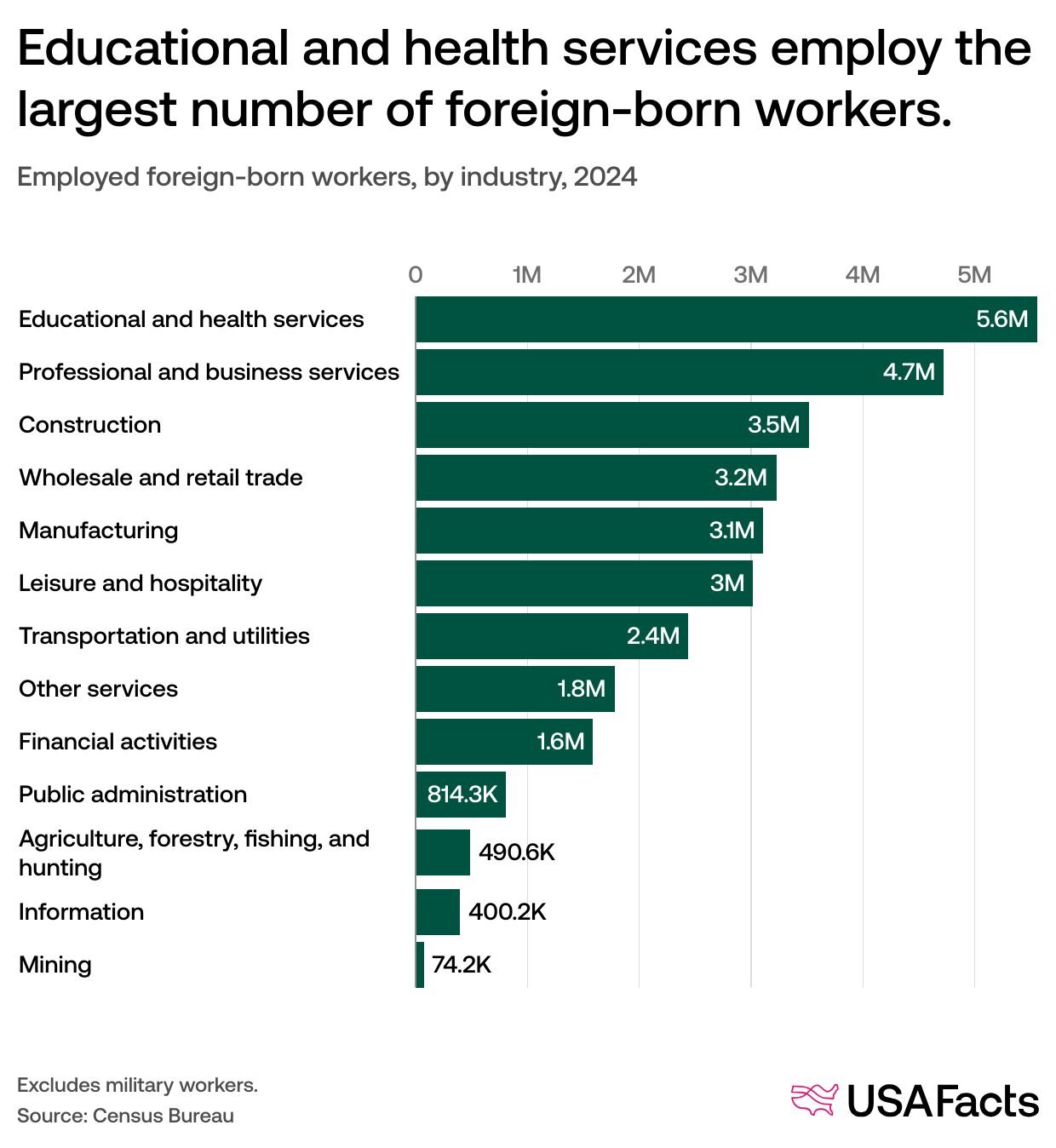
Immigrants make up approximately 17 percent of the U.S. labor force, but account for almost 40 percent of the nation's home health aides (Batalova 2023). As the government imposes tougher regulations to reduce the number of immigrants entering the country, advocates say the country will struggle to fill the 10 million caregiver positions required over the next decade. Some seniors have joined protests against the Trump administration's immigration policies because they worry about the implications for health care in this country (Hsu 2026).
Because of the high prevalence of immigrants in health care professions overall and home health and hospice care in particular, researchers believe immigration saves lives. A study conducted by researchers from Harvard Medical School, MIT, and University of Rochester found that adding 100 immigrants to a metropolitan area reduces the number of deaths among the elderly by one compared to what would otherwise be expected (Powell 2026). The authors added that foreign-born health care workers supplemented, rather than replaced, American workers without suppressing wages — leading to improved health care and quality of life for the entire community.
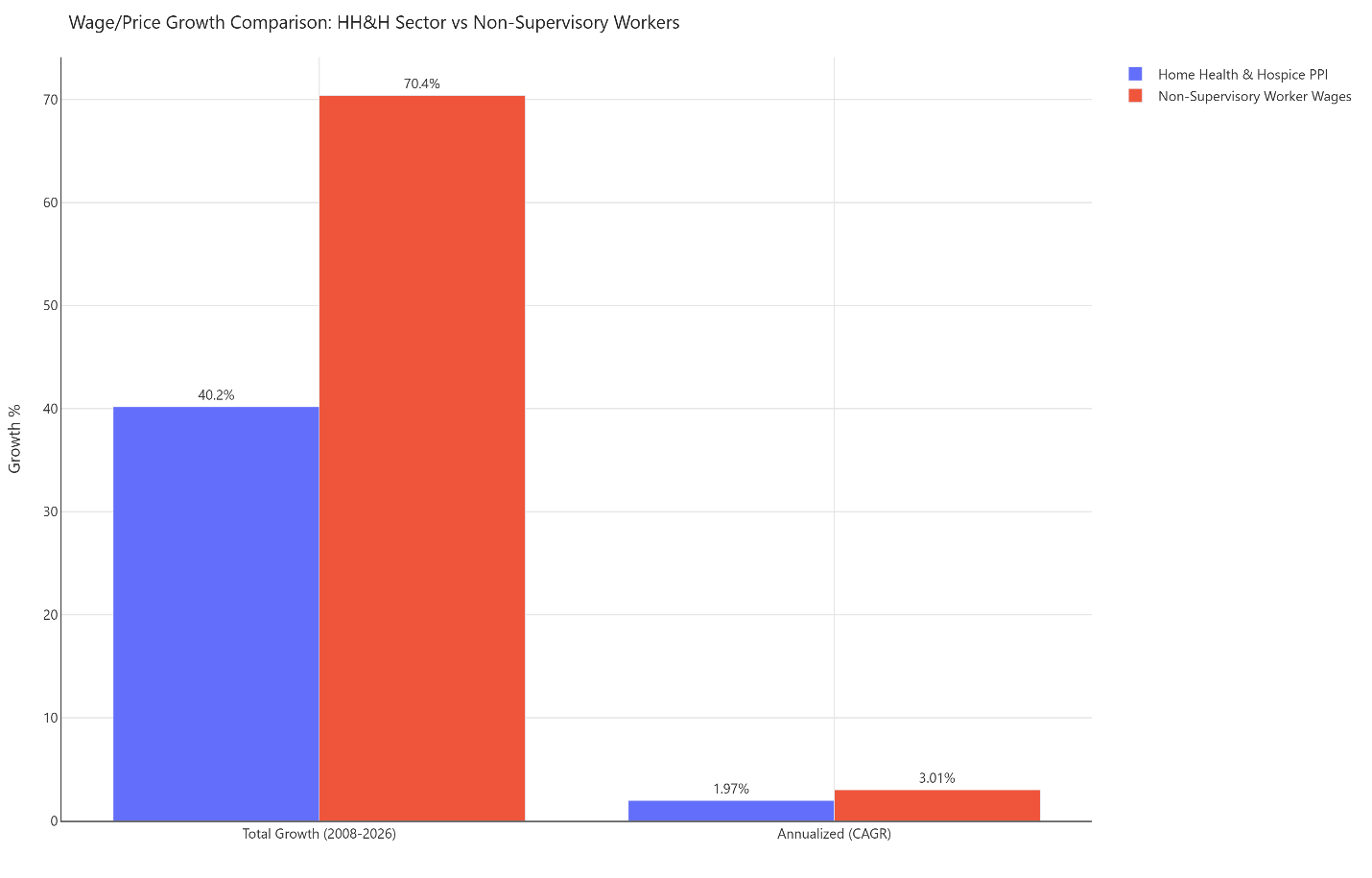
One explanation for why so many foreign-born workers end up in the home health and hospice industries is the relatively low pay of those professions. According to data from the U.S. Bureau of Labor Statistics, wages for workers in the home health and hospice care industries rose 40 percent since 2008, while the wage of the average non-supervisory worker in the United States has risen 70 percent in the same time frame (U.S. Bureau of Labor Statistics 2026). As a result, home health and hospice workers earn a median salary of $35,800 per year — while the median salary across all industries is $48,060.
Home health workers earn $35,800 per year. The national median across all industries is $48,060. That $12,000 gap is part of why this workforce is so difficult to build and so easy to lose.
According to an April 2025 Gallup poll, the share of Americans who said they personally worried about illegal immigration fell by eight points, while the share worried about the affordability and availability of health care rose eight percent (Brenan 2025). Among respondents in the 35–54 age group — who are likely to have aging parents — 55 percent said they had some level of worry about illegal immigration, while 87 percent said they worried about the affordability and availability of health care. As more of them need additional help to care for aging parents, they are more likely to encounter foreign-born workers providing that assistance. That may influence how they view those workers and people like them, leading to a potential shift in voting patterns and in policy.
If that shift does not come, and the U.S. continues to tightly limit the number of immigrants entering the country, many Americans are likely to slowly watch their aging loved ones suffer — powerless to provide them the quality of life they deserve.

Data: U.S. Bureau of Labor Statistics, Producer Price Index — Home Health and Hospice Care, FRED, 2026. Medicare Hospice Use & Spending Aggregate Reports (Kaggle, 2019). Global Health, Nutrition, Mortality, Economic Data (Kaggle, 2025). Industry immigrant employment share data from USAFacts, 2023.
Analysis and visuals: Datastam platform, 2026. All interpretations and writing by the author.
Universe: U.S. civilian labor force and Medicare-eligible population. Immigration figures from Bureau of Labor Statistics and Migration Policy Institute.